

Crate Training Your Puppy: A Simple, Structured Approach
One of the most common questions I get asked is how to approach crate training properly—especially in those first few weeks with a new puppy.
So here’s exactly how I introduced crate training with Brigadier, and how you can apply the same calm, structured approach at home.
Starting From Day One
When Brigadier came home at 8 weeks old, he was introduced to the crate immediately—right from the first night.
At this stage, the key thing to understand is:
Puppies cannot hold their bladder for long
You must set them up to succeed, not fail
Overnight, I made sure there was no more than a 3–4 hour gap between toilet breaks to prevent accidents in the crate.

The Daily Crate Training Routine for your Puppy (First Few Weeks)
A consistent routine is what makes crate training work. Here’s how the day was structured:
Morning (6:00am start)
Straight outside for a wee and poo
Calm praise for getting it right
Short play and interaction
Breakfast
Another toilet break
Back into the crate around 7:30am
Mid-Morning (9:30am)
Out for toilet
Play and light interaction
Back into the crate after 1–2 hours
Lunchtime (12:00–12:30pm)
Out for toilet
Lunch
Short play or light training
Back into the crate (after toileting)
Afternoon
Mid-afternoon: out for toilet + play (around an hour)
Back into the crate for a late afternoon sleep
Evening
Around 5:00pm: toilet, dinner, and play
Back into crate until around 8:00pm
Out again for toilet
Night Routine
Final toilet break: around 10:00pm
Overnight alarm: around 2:00am for a quick toilet trip
Then back into the crate until morning
Why Sleep Matters
A lot of people miss this:
Puppies need 16–18 hours of sleep per day.
Crate training isn’t just about management—it’s about:
Supporting physical development
Preventing overstimulation
Encouraging a calm, balanced dog
If your puppy is getting the “zoomies” in the evening, that’s often a sign they’re overtired, not full of energy. That’s your cue to help them settle—often by using the crate.
Progressing After the First Two Weeks
As your puppy develops:
Gradually phase out the overnight toilet break
Slowly increase time out of the crate if appropriate
Maintain structure—don’t rush freedom
With Brigadier:
He continued having morning and afternoon crate time
The crate remained a place for rest, not punishment
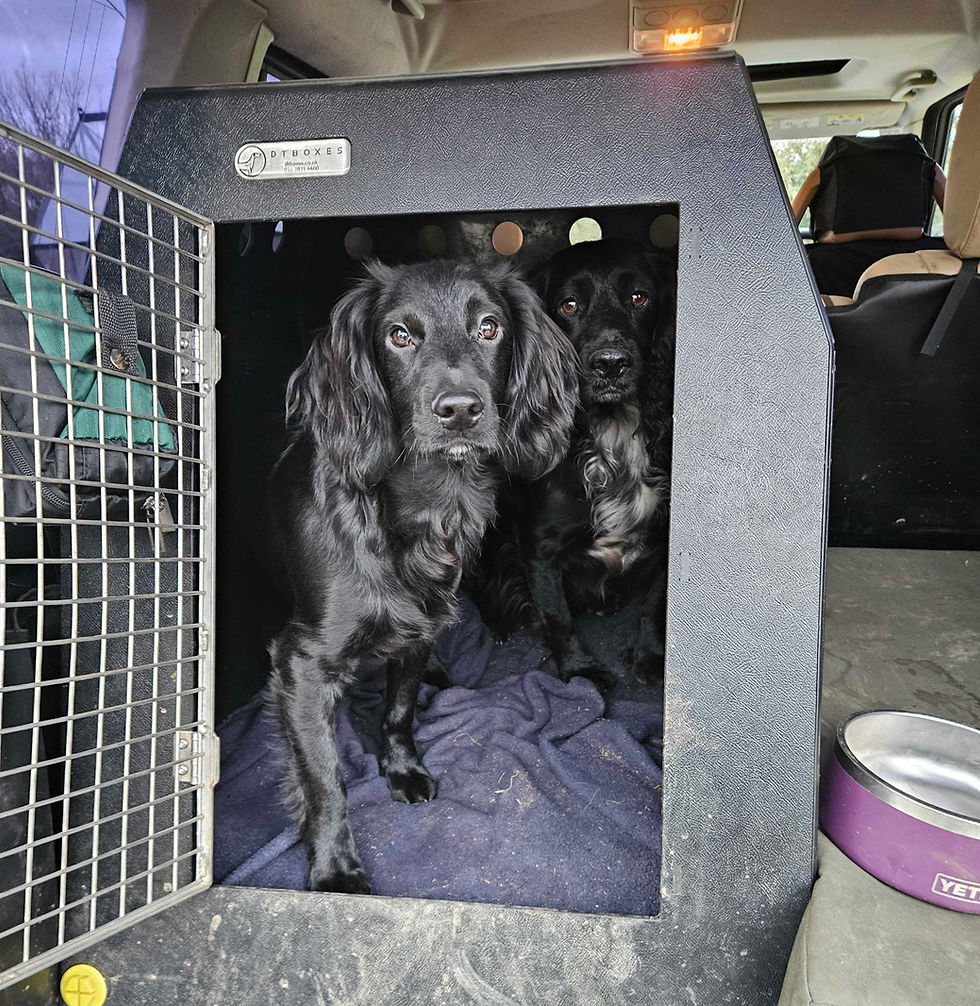
Transitioning by about 5 Months old - this is where we got to
At 5 months old:
He is crated twice a day and when we go out
Final toilet break: around 9:30pm
Sleeps through until 6:00am
Long term Crating?
This is entirely down to preference. I transition away from a crate at about 6 months old, while maintaining a good association with things like the dog box in the car. But a lot of people will continue to use crates for there dogs overnight or when they are out and this is completely fine too!
Key Takeaways
Start crate training immediately and consistently
Build your routine around toilet → play → sleep
Prevent mistakes rather than correcting them
Respect your puppy’s need for sleep and downtime
Progress gradually—don’t rush it
Final Thought
Crate training, done properly, creates:
A calm dog
Better sleep (for both of you)
Clear structure and boundaries
It’s not about restriction—it’s about giving your puppy the right environment to grow, learn, and settle properly.
If you want help applying this to your own puppy, this is exactly what we guide you through in our puppy training courses.


Comments